





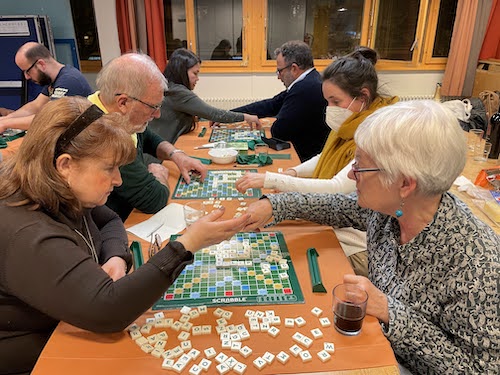
Since 2016, The Swiss English-language Scrabble Association (SESA) has been hosting regular dates for those you love word games and love cracking anagrams. You can read previous articles here and here. Was Scrabble® a board game you haven’t had the chance to play much? Are you looking for a fun way to improve your English while meeting new people? The Swiss English-language Scrabble Association (SESA) invites you to come and play. Whether you’re a beginner or a seasoned Scrabble® enthusiast, SESA offers a thriving community where you can enjoy casual and competitive games.
Founded in 2016 in Geneva, SESA is continuously growing and now has members all across Switzerland. It is led by its dynamic founder and current president, Aurea Fagel and her incredible team: Sophie Lemaitre, David Underhill, Marilyn de Guzman, Drew Meek and Chris Baball. The group meets every Tuesday at 19h at Maison Asters-Servette in Geneva. And during the summer, they take the fun outdoors with picnic Scrabble® & Molkky sessions in the sun!
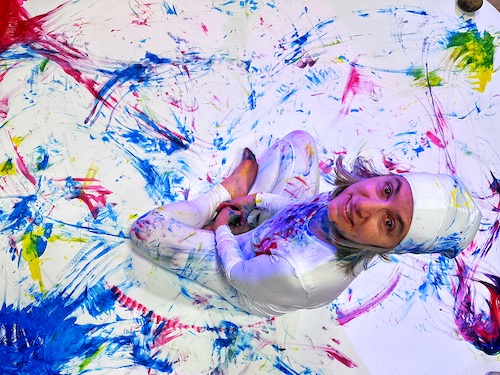
Kids love getting messy and here is a place where they are enabled to express themselves. There is a certain freedom that they won't be able to find elsewhere. We caught up with Giorgina Brown, coordinator for the L’Atelier d’Aventures Créatives (LAAC).
What has been the inspiration for the LAAC?
Creative expression and imaginative play can serve as powerful tools for personal growth, helping children gain autonomy and self-confidence. L’Atelier d’Aventures Créatives (LAAC) aims to provide a space for children to explore, create, as connect with their peers, fostering creativity and social bonds in an informal and nurturing environment.
Have you been working on this idea forever?
The LAAC has been offering creative expression workshops for 20 years, welcoming children aged 4 to 12 during school holidays. It is a project of the Association pour l’Atelier, a non-profit organization that supports artistic initiatives to promote personal development and social connections.
Since 2023, we have also been offering creative workshops for teenagers aged 13 to 16. I have been involved in the project since 2022. After studying philosophy, working as a social researcher, teaching, and being a mum, I realized that “creative living is always more important for the individual than doing well”, as Donald Winnicott so nicely put it. This led me to study Expressive Arts Therapy at L’Atelier in Geneva.
What is the biggest obstacle you have had to overcome?
Since COVID, it has been more challenging to reach full enrolment for our creative weeks. Children who attend often return, which is a positive sign. For example, five out of six children enrolled in this month’s holiday week have participated in several of our previous sessions! However, we still need to reach more parents who may be interested. Thank you, Lisa, for giving me the opportunity to connect with your readers!
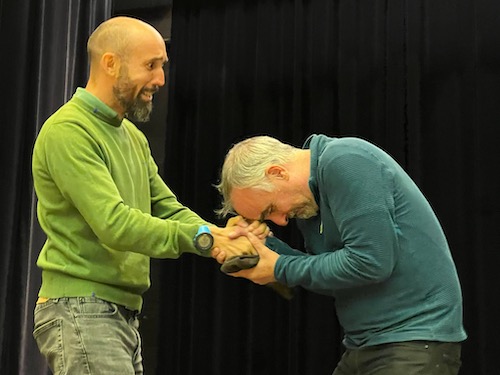
Photo credit: Alexandra Shelest
Family secrets, forbidden desires... and ghosts. Ibsen's Ghosts are no spectral hauntings but absent people, events long buried, and conventions that shape us and our lives, whether we know it or not.
Why Ibsen? Why now?
Ghosts premiered in 1882, but the play's themes are still very relevant in today’s world.
First is the question of determinism versus free will. As we get older, we perceive that events often unfold because of past antecedents. Antecedents which may be unknown to us or may date back generations. How often do we have regrets and wonder, “Why did I do that?”, commenting on behaviors which we don’t recognize in ourselves.
It's cognitive dissonance, and with our ability to map genetic codes, new questions have arisen about the extent of deterministic behavior. Even trauma is now known to leave a genetic imprint. Yet, we know little about our pasts. All that we know of our parents' and grandparents' lives are what they tell us.
And who knows what they left out? Who knows how this genetic baggage with all its secrets influences our behavior? Does this mean we are condemned to repeat the past or to endure its impact?
Hence, the title of the play - "Gengangere", the original Danish title, meaning both "ones who return" and "events which repeat themselves".
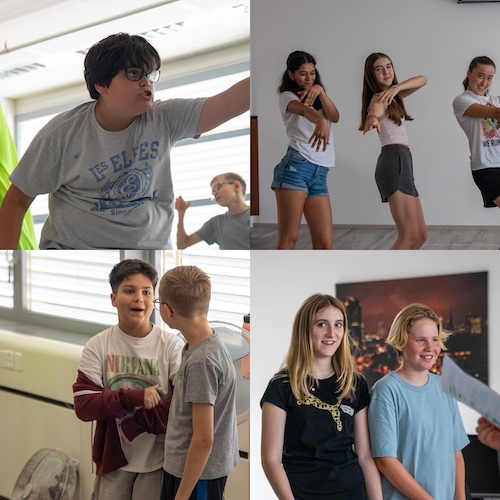
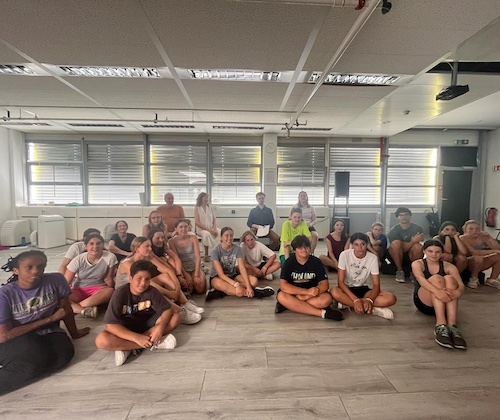
Read below to enter a competition for the 19h30 performance on the 23 August 2024
The brilliant cast and production team of TWENTY have spent every minute this week practicing their scenes, songs and dances! The entire cast of GAOS YOUTH GROUP and most crew members are between 11 and 19 years old.
Discover TWENTY, a captivating show that offers a retrospective of the best GAOS Youth Shows performed in the last 20 years since 2004. Dive into the dynamic and creative world of young talent, who will bring unforgettable moments to life on stage.
The audience will enjoy extracts of 20 different musicals (West Side Story, Beauty & the Beast, Hairspray, Annie, Mulan, The Addams’ Family, to name a few).
Don't miss this unique opportunity to see the stars of tomorrow in action!
- A bar serving drinks and snacks is located on the bottom floor of the theatre.
- Payments by cash, TWINT or credit card.
- Please note no food or drink (except water) is allowed in the theater auditorium.
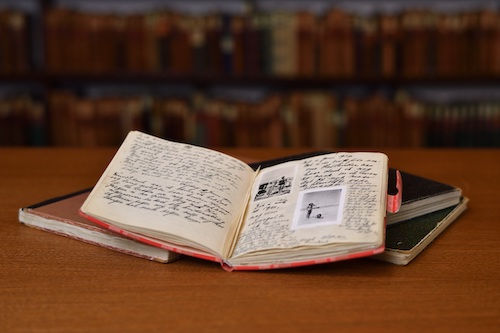
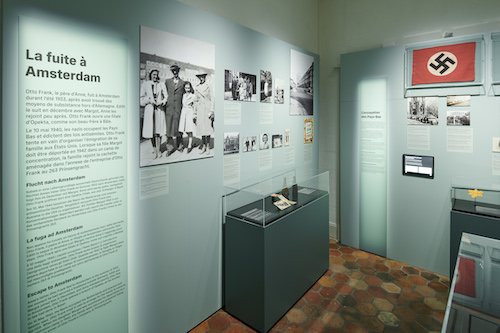
© Anne Frank Fonds Bâle
The Diary of Anne Frank shocked the world after the Holocaust. Chronicling 735 days of fear and hunger in the daily lives of eight Jewish people trapped in a hideout in Amsterdam to escape the Nazis, this chronicle is famous the world over. Little is known, however, of the link between the Frank family, the circulation of the diary and Switzerland.
Anne, her mother Edith and her sister Margot, along with four other Jewish illegal immigrants, perished in the Nazi camps. The only survivor, Otto Frank, returned from Auschwitz in 1945. A stateless man, he chose to settle in Switzerland, and from then on devoted all his energies to making his daughter's writings known. A true plea for greater humanity and tolerance, Anne Frank's diary is part of the world's literary heritage.
© Musée national suisse