





Below you will find a selection of the most recent entries from bloggers in our Work/Business section.
To view the entries from individual bloggers, click on the links below:
- Claire Doole - Claire Doole Communications
Claire is a former BBC correspondent and international spokeswoman who is passionate about helping people communicate with confidence. Since 2006, she has successfully trained hundreds of professionals in the art of presenting and public speaking, talking to the media, managing communications in a crisis, and writing for the web. In addition, she has coached C-level executives and public figures to give powerful TEDx and TED style talks in Europe and the Middle East. A Swiss and UK national, Claire trains and coaches in French and English.
- Elizabeth Ballin - Life Coach
As a long time member of the international community in Geneva, Elizabeth Ballin has been coaching adults and students from all parts of the world. She has coached business professionals, musicians/artists, couples, families and adolescents. She is a fully accredited Life Coach by the International Coaching Federation. Elizabeth Ballin, Life Coach
- Patrick Hoza - US Tax & Financial Services
Since 1990, Patrick has many years of experience with US individual expatriate taxation under his belt, including High Net Worth Individuals, streamline/voluntary disclosure filings and tax consulting, as well as working with large multinationals like Novartis, BP, Hewlett Packard and General Electric. He has extensive knowledge in serving both US expatriates and resident and non-resident aliens with their US tax-related issues. Patrick Hoza is a Tax Director at US Tax & Financial Services, with extensive experience in all aspects of Individual US tax and Expatriation, including Hight Net Worth Individuals and large multinationals.
Patrick started his career in 1990 in California, with Westpro Ltd., as a Senior Tax Consultant, then spent the middle part of his career working at KPMG and Ernst & Young. During his time with Ernst & Young, he worked and lived in Russia, France and finally Switzerland. He has gained a valuable working knowledge of the respective income tax regulations in all of these countries.
Patrick holds a B.A. in International Relations from the University of Colorado, is a member of the National Association of Enrolled Agents and is a Certified Acceptance Agent.
-
Melitta Campbell - Business Coach
Business Coach and Mentor with nearly 3 decades of business experience and a passion for helping women confidently build a business they love. She is also the founder of the Swiss Entrepreneurs Club and president of the Swiss Riviera Toastmasters Club in Montreux. Originally from Wales, she now lives in Montreux in a chalet she has renovated with her husband overlooking the Swiss Alps. - Sunita Sehmi - Walk The Talk
Founder of Walk The Talk, Sunita has been training, developing and now coaching Business Communication skills in both companies and educational establishments for over twenty years. She has a passion for helping people to maximise their potential and created Walk The Talk with the sole aim to drive each and every client to perform their best.
- Robert Harris- Forth Capital
With over 25 years experience working for some of the major financial institutions in the City of London, Robert is a founding partner of Forth Capital, the leading expat financial advisory company in Switzerland. Regulary quoted in newspaper articles and magazines, he is well placed to advise expats on a variety of financial issues that may arise during their time living in Switzerland.
- Debbie Croft - Croft Coaching
As the founder of Croft Coaching, Debbie has a passion for helping people overcome challenges, embrace change and live life to the full; with an ethos of “work hard, play hard”.
- Sarah Santacroce, https://humane.marketing/coaching
Areas of Expertise: Conscious Business Coaching, Humane Marketing, LinkedIn
Sarah Santacroce is a Conscious Business Coach for Coaches and service-based solopreneurs, founder of Humane Marketing and author of Marketing Like We’re Human, Selling Like We’re Human, and Business Like We’re Human. Since 2006 in marketing, entrepreneurship, and conscious business coaching, she’s supporting changemakers worldwide through workshops, programs, and her signature Conscious Business Coaching. Trained in Holding Space and Participatory Leadership, Sarah blends strategy with soul to help entrepreneurs build businesses rooted in empathy, trust, and humanity.
Sarah has been a guest on nearly 100 podcasts and has been podcasting since 2016. Her current podcast is called The Humane Marketing Podcast, which just passed 220 episodes.
- Diana Ritchie - SSC Sàrl
A Director at Swiss Career Connections, Diana will provide you with some useful tips for job hunting.
By Claire Doole, www.doolecommunications.com
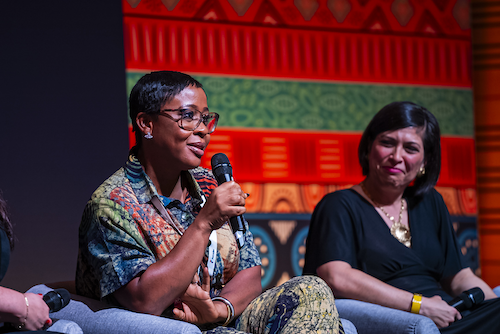
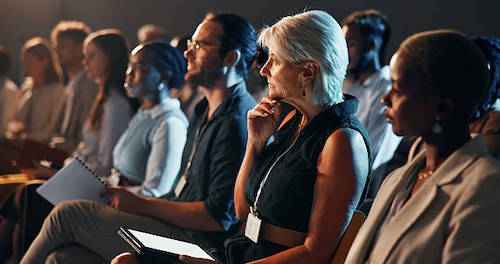
How often have you accepted an invitation to join a panel, only to wonder afterwards what on earth you were thinking?
There you are, sitting on stage, trying to look intelligent and engaged while the moderator fires questions at you that are either completely outside your area of expertise or so far out of left field that you briefly wonder whether you've wandered into the wrong conference.
You try to deflect, improvise and generally look as though you know what you're talking about. Meanwhile, the audience is wondering why you were invited in the first place, and you're wishing you'd asked a few more questions before blithely accepting the invitation.
That conference in Geneva, with the tempting prospect of some pre-Christmas skiing, suddenly doesn't seem quite such a good idea!
This is not a far-fetched scenario. I've witnessed it at conferences and heard similar stories from people I coach to become better panelists.
Based on my experience as a professional moderator and coach, here are my top tips for preparing to be a great panelist.
By Claire Doole, www.doolecommunications.com
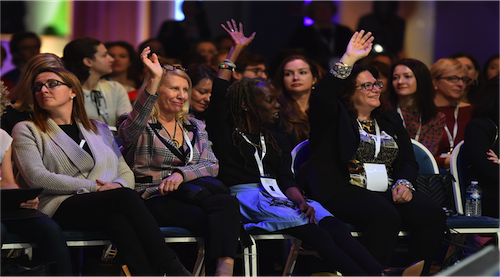
The short answer is not much. In most cases, it goes in one ear and out the other!
Studies show that people forget half of what you say almost immediately; by the next day, it drops to a quarter and a week later, just a tenth.
That is pretty dispiriting given how long people spend preparing presentations.
However, help is at hand from the research of the German psychologist Hermann Ebbinghaus, who at the beginning of the last century pioneered “The Forgetting Curve”.
Ebbinghaus not only showed that the human brain is extremely poor at retaining the spoken word, but he also gave us clear instructions on how to overcome this memory challenge.
In my workshops and coaching sessions, I play a memory game based on Ebbinghaus’s research. Wherever people are from, however educated or linguistically skilled they are, they all tend to remember and forget the same things. Remarkably, we all have the same brain, and it works in the same way, whoever we are!
By Claire Doole, www.doolecommunications.com
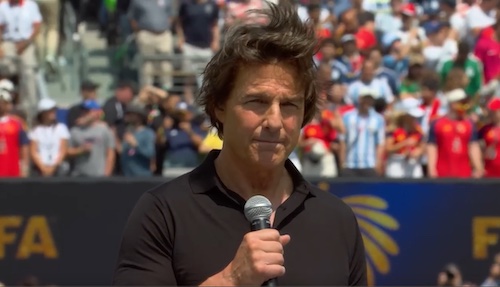
The football league season has just got underway but I want to take you back to the World Cup final in July.
Why on earth was Tom Cruise, an American Hollywood star, giving a speech at the closing ceremony in New York?
That was the question on my mind and on many other football fans – apart from the obvious if you are English which is when is it (the Cup) coming home!
He has no connection with the sport. Why was he delivering a very American-style inspirational message to a predominantly international football audience?
And that was the problem – the ethos or credibility was not there.
In fact, he was telling the audience, something they already know better than him – that football crosses borders and cultures, unites people and as he says at the end – “This is greatness”.
- The Recipe for a Successful Event
- How to grow a coaching business with structure and soul
- Storytelling for inspiring events
- Leadership Communication in a crisis
- Handling the Audience Q&A with Aplomb! – Part Two
- Handling the Audience Q&A with Aplomb! – Part One
- Organising Events – Getting More Bang for your Buck!
- What makes an award-winning presentation?
- Making a successful pitch to an executive board
- How to give a talk that engages the audience
- What makes a great interviewer?
- Tips from a Masterful Media Communicator
- Keeping the show on the road
- Event Organisers, Heed Your Moderator's Counsel
- What makes a great keynote speech?
- Power of the Editorial Sense
- Does work feel like work? Or pleasure?
- Is Chat GPT Valuable for Public Relations Professionals?
- The Unexpected Panel
- What makes a great Master of Ceremonies?
- SEE, STOP, SAY: How to deliver a speech that captivates
- When do you cancel a panel discussion?
- Speechwriting - How to capture your speaker's voice
- Know Your Audience – the Key to Successful Speeches and Presentations
- 10 top tips for nailing that job interview
- The forgotten panel participant - the audience
- Lessons from the pandemic on how to communicate science
- Media Training: How to Answer the Personal Question
- Wolfgang – the master storyteller
- Demystifying the art of storytelling
- Has there been an event reset since COVID?
- Setting up and running hybrid meetings
- Advice from a moderator on how to select your panel speakers
- Melitta Campbell's new book out: A Shy Girl’s Guide to Networking
- Press briefings in the virtual world
- How to professionally produce a virtual event
- Hybrid events the new normal in 2021
- Moderating in the virtual world - Tips and techniques from a professional moderator
- Engaging Presenting in the virtual world
- Business Coach versus YouTube Mentors
- Successful virtual events are good television
- Expatriation the easy way or How I learned to give up my US citizenship and breathe freely again
- Streamlined Voluntary Disclosure for US citizens living in Switzerland
- Facilitating engaging meetings in the virtual world
- The power of virtual learning particularly in a pandemic
- 10 Tips for Moderating Dynamic Virtual Meetings
- Unprecedented pandemic press conference from pharma industry
- Business Success Secrets from a Local Business Coach for Women
- Storytelling is an essential professional skill
- How to Plan your Business for Success in 2020
- Creating a STAR panel discussion
- An end to "Manels" and "Manferences" - a Moderator's View
- Helena Rubenstein - Opportunity missed to tell the story of a great woman
- How to make your point the right way
- How to succeed at a video job interview
- Storytelling to further your career
- A job interview is a presentation
- The Perfect Career for Trailing Spouses?
- Avoiding Oscar Night Gaffes
- Is Davos the gold standard of panel discussions?
- Search Inside Yourself: born at Google and based on neuroscience
- Time in the market, not timing the market
- You Too Can Be A Powerful (TEDx) Public Speaker
- What Makes a Powerful TED Talk?
- Sunita meets one of the authors of "The Joy of Leadership"
- Building Rapport for Effective Communication
- Benefits of Next Generation Passive Investment Strategies
- Sunita talks to plant-based Chef Anou Boccasam
- Handling Question and Answer Sessions
- How to construct a memorable speech
- Motivational speeches: Take a lesson from football
- Sunita talks to yoga teacher, Céline Le Roux Schaer
- 6 top tips for an engaging panel discussion
- How Women Rise: Break The 12 Habits Holding You Back From Your Next Raise, Promotion Or Job
- An interview with Anne-Marie Struijk, Founder of La Maison de Tara
- How to craft a memorable sound bite
- Delivering powerful presentations
- Saving Swiss Public Service Broadcasting: Tips on structuring a persuasive speech
- An interview with Peter Wharton
- How to be prepared for market volatility – the importance of risk profiling explained
- How to reach your peak - an interview with Anders Ericsson
- Moderating with a Cartoonist
- Technology can transform your conference
- Hotel-Restaurant Valrose in Rougemont, Vaud - an interview with John Grohe
- Moderator, Facilitator and Master of Ceremonies: What is the Difference?
- “Pain is the agent of change,” Grief Works: Stories of Life, Death and Surviving
- Women and retirement – prepare in advance and be independent – just in case!
- Lessons from a Master Coach: What I learnt about public speaking from a musical maestro
- Sunita Sehmi talks to gender and inclusion specialist, Fleur Heyworth
- "Answer, don't avoid the question Prime Minister"
- Sunita Sehmi: interviewer and interviewee
- John Tomlinson talks to Sunita Sehmi about Trainer Tools, a collaborative podcast project for trainers
- The Local Media: Friend or Foe? How to constructively engage with local journalists
- Champion of women, food guru, inspirational entrepreneur: Pinky Lilani, the Ultimate Spice Girl
- How to moderate a hot topic
- Many Expats unaware their UK pensions have been affected
- Sharing happiness with Frederik Van Lierde, founder of Gift Voucher Kiosk
- How to sound natural when reading a speech
- The Entrepreneur's Wife: A Survival Guide
- The inaugural speech of Donald Trump: How persuasive was it?
Page 1 of 30


Latest news


- 1
- 2
- 3
- 4
- 5
- 6
- 7
- 8