

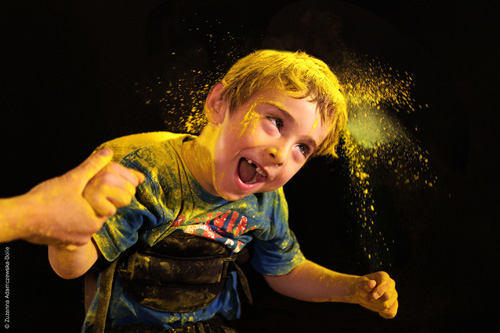
“Shake it off” in Lausanne this Saturday, 10 October, and help spread the word...
A special campaign designed to shake off prejudice towards people with cerebral palsy and raise awareness about the lives of people with motor disabilities has just been launched in Lausanne by both the Handi-Capable Association and Cerebral Association.
The "Shake it off 4 CP" campaign was launched officially on 7 October 2015, World Cerebral Palsy Day, with a new "Shake it off" video, which can be viewed on YouTube and at www.shakeitoff4cp.com. The focus of the campaign, however, will be on 10 October, when there will be a special event in Lausanne inviting the public to shake off powder, glitter and confetti in front of the cameras, and then post their own versions of the video on social media, challenging others to do the same!
Facing the daily difficulties related to the disability of their own children, two mothers, Christine Luetscher Rochat and Maggie Goudy, decided to take action and launch the new campaign to create awareness and educate a wider public audience about the lives of people with motor disabilities. Their aim is simple: to offer a different perspective – that those individuals with disabilities can enjoy a life that is joyful, positive and colored.
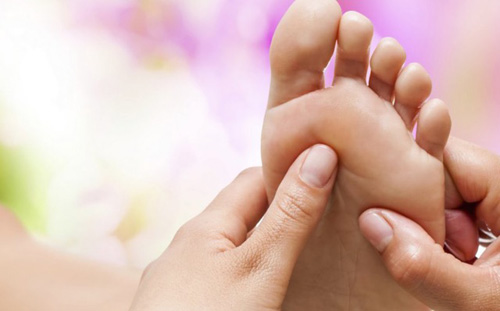
Experienced reflexologist, Fabienne Mourgue d’Algue, is offering knowitall.ch readers 10% off all reflexology massages booked before the end of 2015.
Using a unique combination of reflexology and Maïeusthésie, Fabienne’s treatments are considered to be quite special in the Geneva area, helping clients to overcome a variety of conditions such as depression, lack of confidence, tiredness, sleeping difficulties, constipation, and stress.
Fabienne explained, “Reflexology is practised by the gentle massage of the reflex zones of the feet, restoring the body’s natural equilibrium. Maïeusthésie is a psychological technique created to reveal the part of you that has being suffering. You will feel lighter and much more free after this therapeutic moment. Having studied the disciplines of reflexology and Maïeusthésie for 3 years, I have spent the last 18 months in private practice, using my knowledge to adapt each treatment to the individual needs of my patients.”
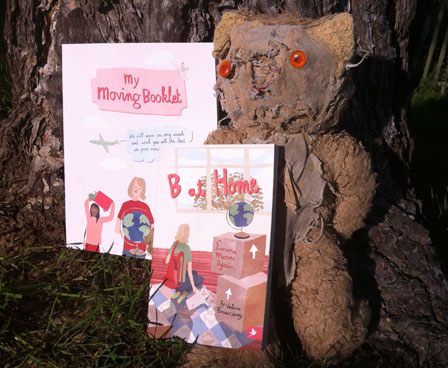
Valérie's childhood teddy bear is one of the principal characters in her first book.
Following on from the success of her first book, B at Home, local author, Valérie Besanceney, has just published a second book on the same theme of moving home.
Called My Moving Booklet, the new 80-page paperback is designed to help children through the initial stages of an upcoming move. Whilst moving can be exciting, it can also be terrifying at the same time. On the one hand, it can be very sad to say goodbye, but on the other it can also be incredibly fun to experience new things and meet new people. Everybody experiences a move differently, but it is very important to say goodbye properly.
Valérie told knowitall.ch, “This booklet allows children to truly welcome the new challenges and adventures that lie ahead of them, together with their parents and teachers. In many parts of the booklet, I have given them the opportunity to either write about it, to draw a picture, or to glue on a photograph. This is their own unique story that one day will serve as a keepsake of a life-changing event.”
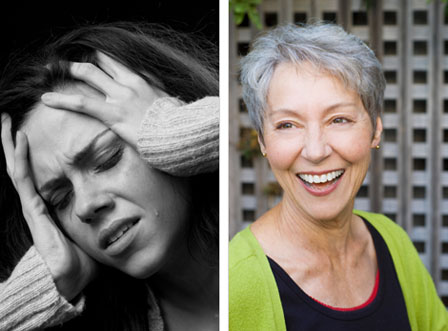
A neuromuscular dentist in Geneva has been helping clients overcome a wide range of painful symptoms, not normally considered treatable by dentists.
Neuromuscular dentist, Dr. Yves Delessert, has been using techniques such as muscle relaxation (TENS), electromyography (EMG) and jaw tracking to relieve discomfort in clients suffering with a variety of debilitating conditions such as headaches, tinnitus, temporomanibular disorders (TMJ/TMD), and myofacial pain.
Currently the only DDS (Doctor of Dental Surgery) in Switzerland practising neuromuscular dentistry (NMD), Dr. Delessert explained to knowitall.ch, “NMD is a term applied to techniques that expand upon the traditional approach to dentistry, and considers the entire system that controls the positioning and function of the jaw. The neuromuscular dentist seeks to establish a jaw position based on the harmonious relationship of three main factors affecting occlusion - the teeth, muscles and jaw joints. The resulting jaw position is called the neuromuscular bite.”
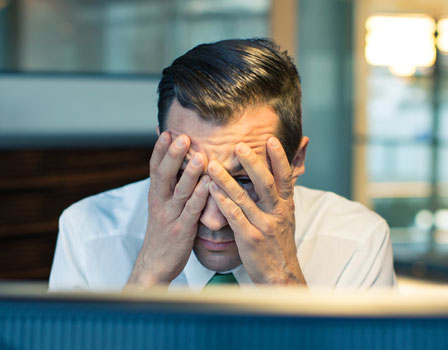
At the beginning of this year, we received a number of emails from readers keen to recommend the services of local counselors and therapists, who have helped them come through challenging periods in their lives.
Two therapists, whose details arrived too late to be included in the latest edition of Know-it-all passport, are Eric Vandenhoeck and Robin Saunders, so we thought it might be helpful to introduce them to you now. Another therapist, Tania Goudas, sent her details just in time to be included, but since her practice is quite new we thought it would be good to include some details about her services too!