



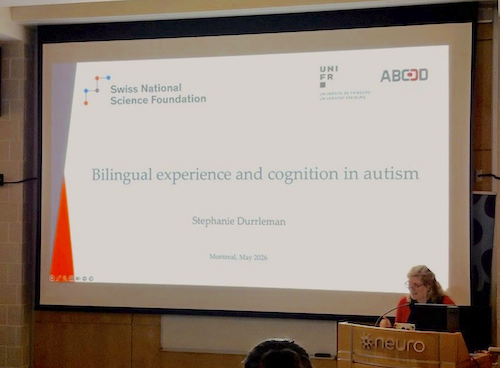
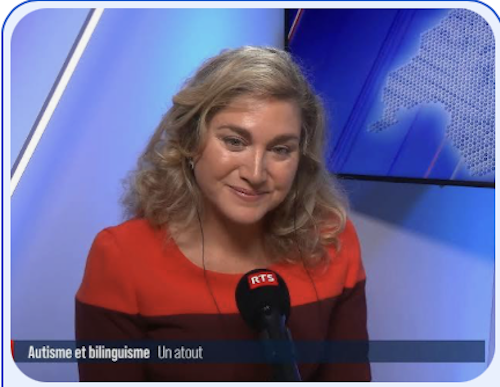
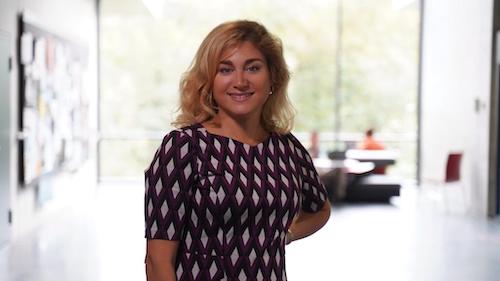
The Autism, Bilingualism, Cognitive and Communicative Development (ABCCD) group of the University of Fribourg focuses on both Autism Spectrum Disorder (ASD), one of the most common neurodevelopmental disorders today, and bilingualism, which is currently more common than monolingualism. We caught up with Prof. Dr. Stephanie Durrleman, Head of the ABCCD, and she explained that her videos communicate their scientific findings on multilingualism in children with and without autism in accessible terms.
What has been the inspiration?
My interest in this topic came from two observations. Many multilingual families of autistic children were being advised to stop speaking their home language and switch to the majority language. Parents often found this distressing because it could mean giving up the language in which they felt most comfortable communicating with their child and extended family. At the same time, they worried that continuing to use their native language might somehow harm their child.
I was also familiar with research suggesting that bilingualism can benefit certain aspects of development in some children without autism. Since some of these same areas are often affected in autism, I wondered whether the recommendation to avoid bilingualism was not only unsupported by evidence, but potentially steering families in the wrong direction.
Have you been working on this idea forever, or was it something that came to you recently?
I have been studying language development and autism for much of my academic career. My focus on bilingualism and autism emerged when I became aware of the concerns multilingual families were facing and the lack of evidence-based guidance available to them. At the time, very little research had been conducted on bilingual autistic children. Since then, my colleagues and I have been working to build an evidence base that can help families, clinicians, and educators make informed decisions.
What is the biggest obstacle you have had to overcome?
One of the greatest challenges has been overcoming long-standing misconceptions. For many years, the idea that autistic children should be exposed to only one language was widely accepted despite the lack of scientific evidence supporting it. Changing beliefs takes time, particularly when families receive conflicting advice. This is one reason why communicating research findings in accessible ways is so important.
What are your plans for the future?
Our goal is to continue making scientific findings accessible to families, educators, clinicians, and the wider public. We also hope to continue investigating how multilingual experiences influence language, cognition, and communication in autistic and non-autistic children.
What is your favorite production you offer and why?
Rather than products, we create research-based resources. I am particularly proud of our outreach videos because they translate complex scientific findings into clear, practical messages for families. Making research accessible beyond universities is something I care deeply about.
Many parents have told us that learning about the research reassured them that they did not need to abandon their home language because their child is autistic. Several families have shared that the findings gave them greater confidence in raising their children bilingually.
Anything else you think our readers would like to know?
One of the most important messages from our research is that families should not feel pressured to give up their home language because a child is autistic. Language is not only a means of communication—it is also a source of connection, culture, and identity. The growing body of research suggests that autistic children are capable of learning more than one language and that multilingualism does not place them at a disadvantage. Decisions about language use should be guided by evidence rather than by myths or fears.
Prof. Dr. Stephanie Durrleman
Head of the ABCCD Lab
Faculty of Science and Medicine
University of Fribourg
Ch. du Musée 5
CH-1700 Fribourg
https://www.unifr.ch/med/fr/research/group/durrleman
stephanie.durrleman@unifr.ch
+41 26 300 85 75
ABCCD outreach videos can be found at this link: https://tube.switch.ch/collections/dHD4WM9cp0