


• Buy the 11th edition of Know-it-all passport
  • Computer Problems? David can help
  • Cirieco Design - Graphic Design and Marketing Services

Claire Doole, Claire Doole Communications
clairedooleportrait 200

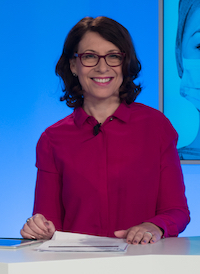
Claire Doole is a former BBC correspondent and international spokeswoman who is passionate about helping people communicate with confidence. Since 2006, she has successfully trained hundreds of professionals in the art of presenting and public speaking, talking to the media, managing communications in a crisis, and writing for the web. In addition, she has coached C-level executives and public figures to give powerful TEDx and TED style talks in Europe and the Middle East. A Swiss and UK national, Claire trains and coaches in French and English.

Claire is also a highly experienced moderator having facilitated panel discussions with government ministers, NGO activists, humanitarians and human rights specialists at major events.
www.doolecommunications.com

Save

Save

Save

Save

By Claire Doole, www.doolecommunications.com

The football league season has just got underway but I want to take you back to the World Cup final in July.

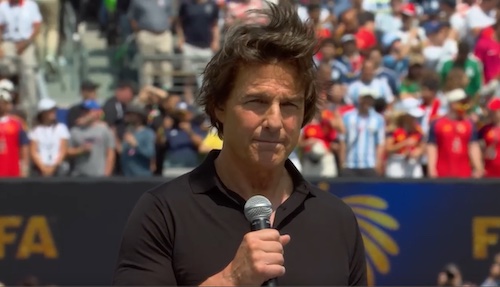
Why on earth was Tom Cruise, an American Hollywood star, giving a speech at the closing ceremony in New York?

That was the question on my mind and on many other football fans – apart from the obvious if you are English which is when is it (the Cup) coming home!

He has no connection with the sport. Why was he delivering a very American-style inspirational message to a predominantly international football audience?

And that was the problem – the ethos or credibility was not there.

In fact, he was telling the audience, something they already know better than him – that football crosses borders and cultures, unites people and as he says at the end – “This is greatness”.
GENEVA CHALLENGE 2024 086 E.ROSET
 
By Claire Doole, www.doolecommunications.com, Photo Geraldo Pestalozzi
 
Do the words “deliver a pitch” make your stomach drop?
 
You’re not alone. Pitching taps into a very human fear: being judged, rejected, or dismissed—especially by someone more senior. When your idea is turned down, it can feel personal, even when it isn’t.
 
Add to that the pressure of time—often just 3–4 minutes to be clear, compelling, and convincing—and it’s no surprise many people dread it.
 
But here’s the reality: pitching is a skill. And like any skill, it improves quickly with the right approach and practice.
 
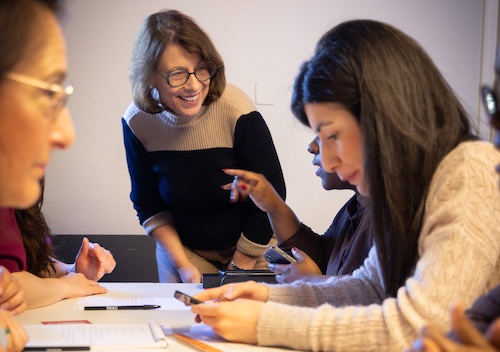
At a recent workshop I led for the Geneva Communicators Network, I worked with professionals from international organisations, NGOs, companies and foundations on how to present ideas with clarity and impact. Over the years, I’ve helped teams pitch to donors, boards, and senior leadership—and the same principles apply every time.
 
Here are 13 practical ways to deliver a pitch that gets results:

GENEVA CHALLENGE 2024 086 E.ROSET
 
By Claire Doole, www.doolecommunications.com
 
I am not good with numbers. After all I make my living from words. I always need a second opinion about my finances. 
 
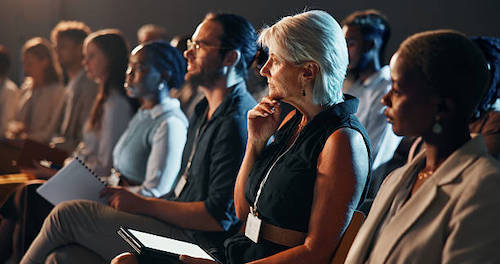
I was delighted when a friend invited me along as a “plus one” to a presentation given by her private Swiss bank at a five-star Geneva hotel.  We were both looking for reassurance that our life savings would not suddenly disappear. 
 
It started off well with canapés, and champagne. Then the music began and the first of three very slick well-dressed bankers took to the stage.
 
Expectations were high. However, they quickly plummeted. 
 
For the first hour, they spoke almost entirely about background and history—detail after detail that we simply didn’t need. What my friend and I really wanted to know was straightforward: will there be a financial apocalypse in 2026? 
 
Unfortunately, that question wasn’t answered until the final five-rushed minutes. By then it was too late. People had already left. It was a perfect reminder that if you don’t focus on what matters to your audience from the start, even the most polished presentation can fall flat. They failed to understand the concerns of the audience – our worries about the impending financial cliff that we may be walking off this year. 
GENEVA CHALLENGE 2024 086 E.ROSET
By Claire Doole, www.doolecommunications.com
 

Organising an event should be like cooking a great meal: a careful balance of technical know-how and creative flair. Get the mix right and your guests leave satisfied, inspired, and possibly asking for seconds.

Get it wrong… and you’re serving up something bland, or overcooked
Sadly, many organisers fail to find the right ingredients. They over-season with PowerPoint presentations, dilute the panels with speakers who lack incisive insights, and wonder why the audience sneaks out before dessert.

But last year, the organisers of one of the most enjoyable events I moderated absolutely nailed the recipe. They served up the right blend of policy substance and creative flair.

So, let me share what made this event so deliciously satisfying.

The Dish: The ALMA Journey
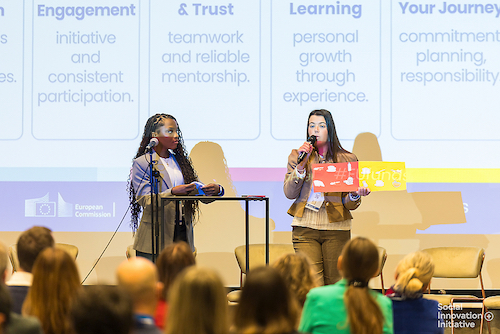
The ALMA (Aim, Learn, Master, Achieve) journey celebrated the achievements of young people not in employment, education, or training who had taken part in a transformative European Commission programme, working for a short period in another European country.

In short: a meaningful initiative, a powerful story — and the perfect base ingredient.

Here, in 8 easy steps, is their recipe for success.
GENEVA CHALLENGE 2024 086 E.ROSET
Celeste Saulo WMO
By Claire Doole, www.doolecommunications.com
 
From the time humans gathered around fire, our minds have been drawn to stories. It’s instinct — the way our brains lean forward when a tale begins, eager to connect, to feel, and to imagine what comes next. Stories don’t just entertain us. They move us and inspire us. 
 
I am always struck by it – rooms filled with overcomplicated PowerPoint slides and speakers piling on facts like bricks, rather than telling a good story whose emotional pull, if well told, we will always remember. 
 
Below are three examples of good storytelling during an event  that I hope will inspire you to tell more stories. 
 
1) Stories on panels: At Geneva Peace Week, I helped the Women’s International League for Peace and Freedom design a panel where the speakers were asked to share their stories with the audience. The team created a space for the audience to think differently and listen deeply. People were shown to their seats by torchlight. They listened in darkness to an audio recording we created to mark an event in history, and then the moderator went on stage.
 
She turned on the light next to her and asked each speaker one by one to turn on their side light and tell a 3-minute story before she moderated a discussion. It was a STAR panel (something they will always remember).